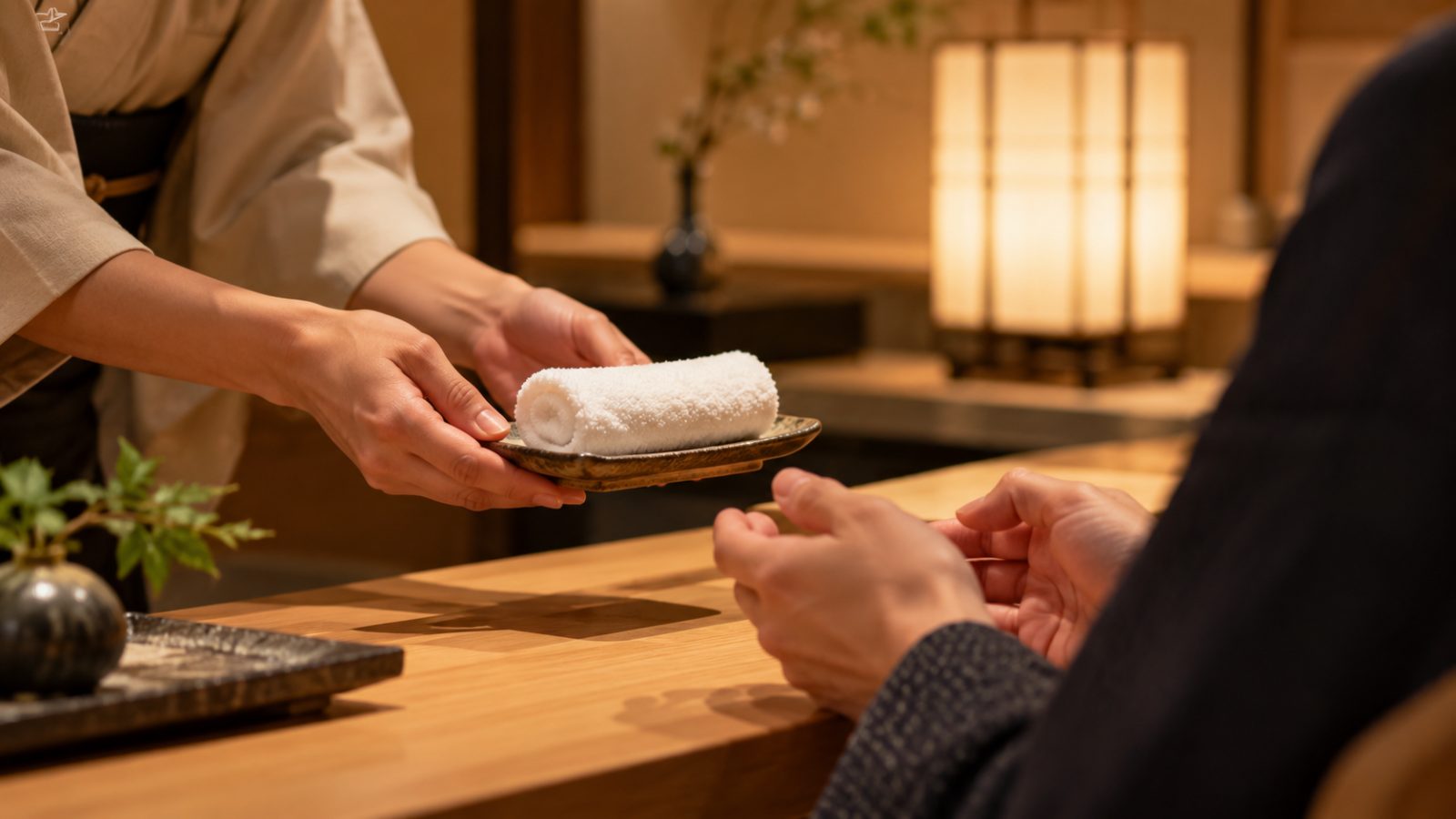
Omotenashi: Inside Japan’s Idea of Perfect Hospitality
In Japan there is a word for hospitality that has no clean English translation: omotenashi. It describes care that anticipates a need before the guest feels it, offered without expectation of anything in return — not even acknowledgment. It sounds lofty. It is also intensely practical, and pieces of it can be installed in any service culture, including yours.
Anticipation over reaction
Western service tends to be responsive: the guest asks, the server delivers. Omotenashi inverts this — the water is refilled before it is empty, the coat is taken before it is shrugged off. Training a floor team to scan for the next need, rather than wait for the request, is the single fastest upgrade most dining rooms can make.
The unseen preparation
In Japanese service culture, most of the work happens before the guest arrives: the room considered from the guest’s chair, the walk from the door rehearsed, the details decided on purpose. That discipline — a real pre-service ritual instead of a rushed lineup — is what makes effortless-looking hospitality possible.
Every guest, one time
Japanese hospitality carries an old idea: treat each gathering as something that will never happen exactly this way again. Practically, it means tonight’s table 12 is not “another four-top.” It is the only time these people, in this mood, will ever have this dinner. Teams that internalize this stop performing service and start paying attention.
The honest limit
You cannot staff a Friday rush like a Kyoto ryokan, and you should not try. Borrow the posture, not the ceremony: anticipate, prepare, and treat repetition as the enemy of attention. That much scales.