Hospitality Cultures Around the World
Hospitality is universal; its dialects are not. Around the world, cultures have evolved distinct answers to the same question — what do we owe a guest? — and each answer is a working blueprint an operator can learn from.
Greece: philoxenia
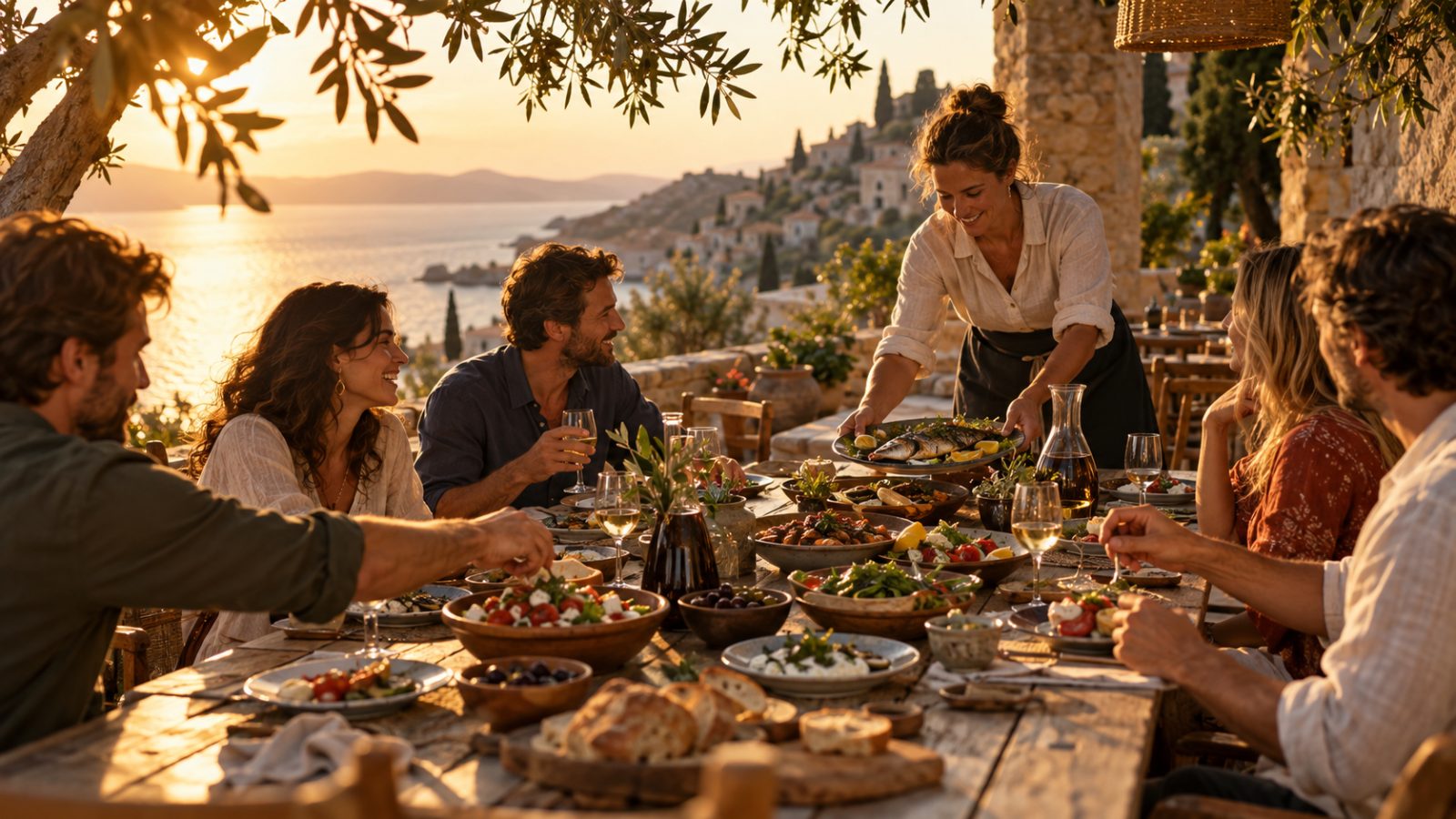
The Greek taverna runs on philoxenia — literally “love of the stranger.” The guest is treated as an honor, not a transaction: the extra plate that arrives unbidden, the owner who sits down at your table. The blueprint: blur the line between commerce and welcome, and guests stop comparing you on price.
Italy: the table as family
Italian hospitality centers the table itself — long meals, shared food, and the assumption that eating is a social act. The blueprint: design for lingering. Rooms that rush turnover win a cover; rooms that host an evening win a household.
The American South: welcome out loud
Southern hospitality is expressive and verbal — you are greeted, named, checked on, and sent off warmly. The blueprint: warmth spoken out loud is warmth guests can quote in a review.
The common thread
Every tradition, from a Bedouin tent to a Tokyo counter, agrees on one thing: the guest must feel expected. However your room says it — a plate, a pause, a name remembered — make sure it says it on purpose.