Growth stories in hospitality usually arrive as a number. This one is 23.
That’s how many new restaurants WOWorks — the parent company of Saladworks, Frutta Bowls, Garbanzo Mediterranean Fresh, The Simple Greek, Barberitos and Zoup! Eatery — has opened so far this year, according to a recent report from FB101. Another 15 are in development, the group is closing in on 240 locations across the United States, and it is targeting close to 40 new stores by year’s end. It even planted its first Canadian flag with a location in Cambridge, Ontario.
The number is impressive. The decisions underneath it are more useful.
At Tavern Talk, we spend most of our time inside independent restaurants and bars, not national franchise groups. But the same principles show up at every scale. When you strip away the size, WOWorks’ expansion is a case study in five things that make hospitality businesses grow on purpose rather than by accident.
1. Growth follows a clear position
WOWorks’ entire portfolio sits inside one idea: better-for-you food that fits the way people actually eat now — fresh, customizable, and quick. Every brand in the group is a variation on that promise. Their CEO framed the expansion around exactly that consumer, not around the real estate.
This is the part most operators skip. Venues open second locations, add patios, or launch brunch because the opportunity appeared, not because it strengthened a position guests already understand. Before anything expands, the question is simple: if a first-time guest walked in tonight, could they explain in one sentence why your place exists? If the answer is fuzzy, growth will multiply the fuzziness.
2. Co-branding: one roof, two reasons to visit
The most interesting detail in the report is that nearly half of WOWorks’ new openings are co-branded — two concepts sharing a single location. Saladworks alongside Frutta Bowls. Barberitos paired with Garbanzo. The group is also converting existing single-brand stores into dual-brand units.
Think about what that does to the economics of a room. Rent doesn’t change. The kitchen footprint barely changes. But the venue now captures two different cravings, two different dayparts, and two different reasons for the same guest to come back this week.
Independents can borrow the logic without borrowing a second brand. A cocktail bar that runs a serious coffee program from 7 a.m. is co-branding. A restaurant whose private dining room becomes a ticketed supper club on Mondays is co-branding.
3. Go where the traffic already is
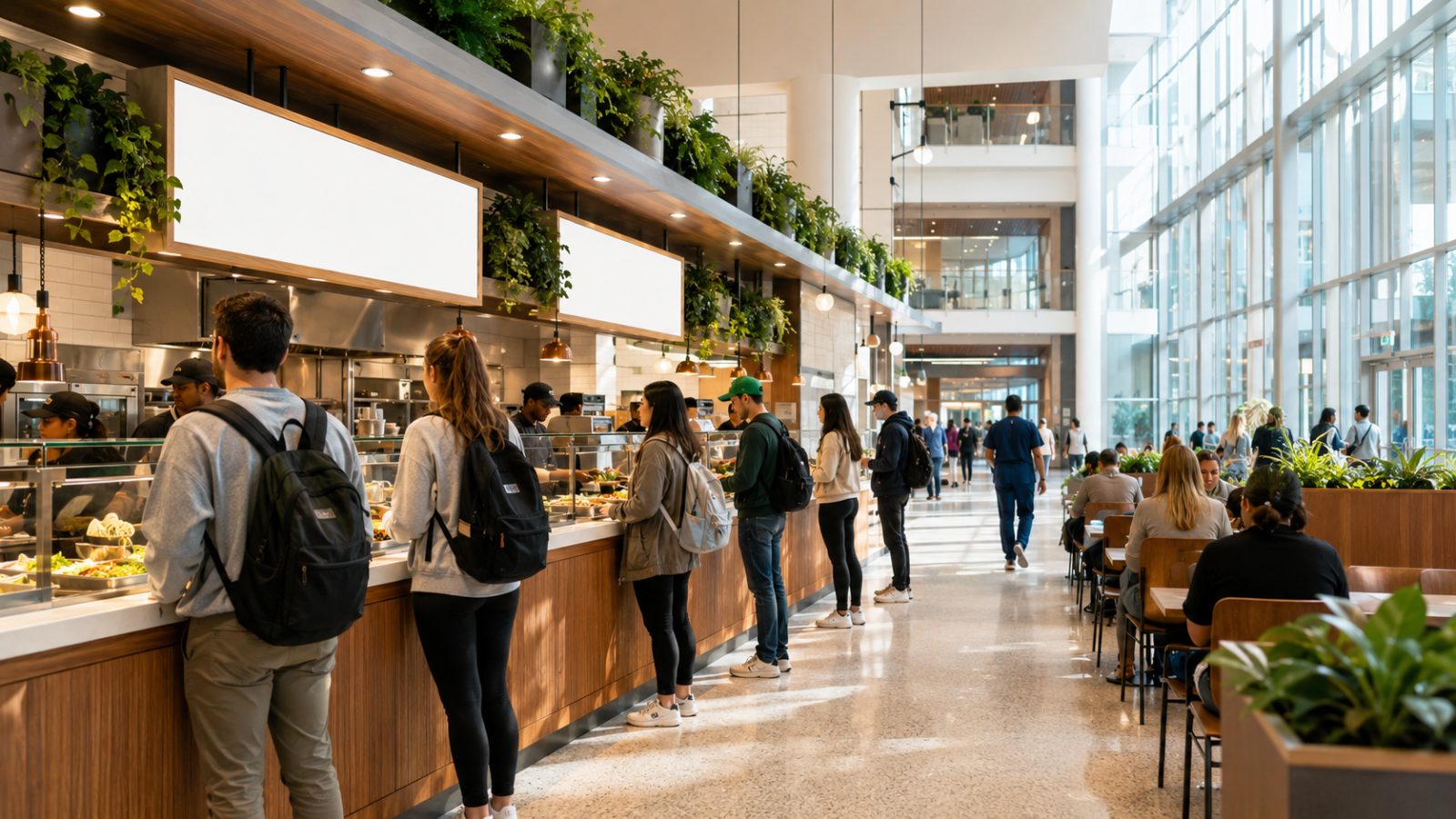
WOWorks opened inside the University of Georgia’s student center, at Notre Dame, and at the University of Texas MD Anderson Cancer Center. These aren’t glamorous corner sites. They are captive, high-frequency audiences with predictable rhythms.
Non-traditional venues force operational discipline. A campus location cannot rely on ambiance to forgive a slow line. Speed, consistency, and a menu that executes the same way at 12:15 on a Tuesday as it does on a Saturday are the entire product. For an independent, the equivalent might be a stadium concession, a hotel lobby, a food hall stall, or a catering program — lower-glamour channels that put your brand in front of people who never planned to seek it out.
4. Convert before you build
Rather than only signing new leases, WOWorks is upgrading locations it already operates. Converting a single-brand unit into a dual-brand one is cheaper, faster, and less risky than building from the ground up, because the team, the lease, and the local customer base are already in place.
We see the opposite instinct constantly: owners who want a second venue before the first one is running at its potential. The most profitable expansion is almost always the one that happens inside your existing four walls — a weeknight program that fills Tuesday through Thursday, a menu re-engineered around what actually sells, a service standard that turns a first visit into a fourth. Fix the room you have, then replicate what works.
5. Systems are what make scale possible
You do not open 23 restaurants in a year on charisma. You open them on documented systems: opening and closing procedures, training that produces the same service from a brand-new hire, cost controls that survive a manager change, and a menu simple enough to execute identically in Ohio and Ontario.
This is where growth ambitions usually break for smaller operators. The founder’s standards live in the founder’s head. The moment the founder isn’t in the building, the experience changes — and guests notice before the P&L does. Writing down how you do things is not bureaucracy. It is the only way the business becomes something that can grow without you.
What this means if you run one venue
You don’t need 240 units for any of this to apply. The questions are the same at every size:
WOWorks’ year is a reminder that expansion is not a goal. It is a result — of positioning, occupancy, operational discipline, and systems that hold under pressure. Get those right and growth stops being a leap and becomes the obvious next step.
Source: FB101, “WOWorks Opens 23 New Restaurants Year-to-Date, Leans Into Co-Branding and Better-For-You Expansion.” Images are illustrative and do not depict WOWorks locations.